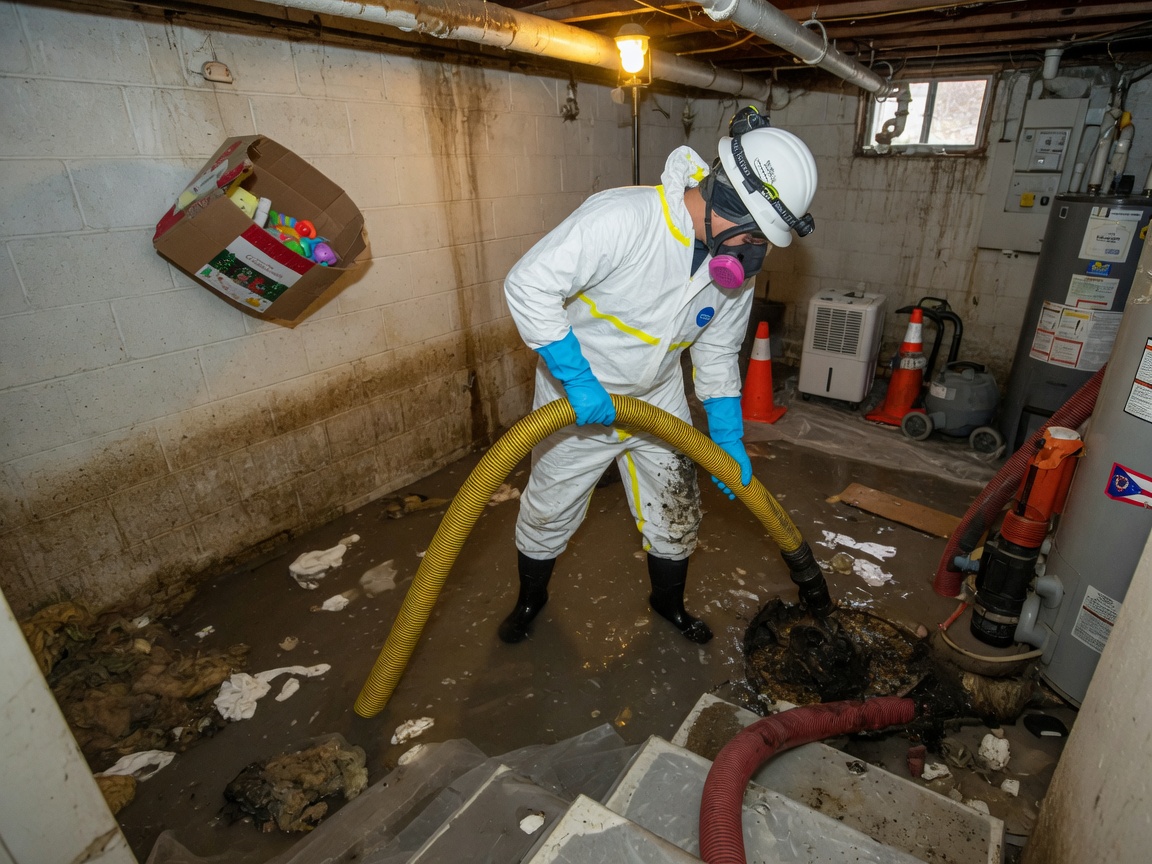
Sewage backups introduce Category 3 black water carrying bacteria, viruses, and parasites that penetrate porous materials within minutes. In Bowling Green's humid subtropical climate, moisture lingers in wall cavities and under flooring, creating rapid mold growth even during mild winters. Technicians at our Russellville Road location use full-face respirators, Tyvek suits, and negative air machines to contain aerosols before any extraction begins. Homeowners in Indian Hills or near Lost River Cave often discover backups after heavy rains overwhelm older sewer lines, requiring immediate removal of affected carpet pad, baseboards, and insulation to prevent cross-contamination into HVAC systems.
Warren County properties near Beech Bend Park and the Plaza frequently experience backups from tree-root intrusion or municipal line failures. We follow EPA and local health guidelines for disposal, double-bagging all saturated debris before transport to approved facilities. Edge cases include sewage migrating into finished basements with radiant floor heating or reaching second-story bathrooms through vent stacks; these demand camera scoping and targeted demolition rather than blanket removal. Attempting DIY cleanup risks improper disinfection, leaving residual pathogens that trigger respiratory issues or skin infections weeks later.
Drying protocols after sewage events exceed standard water damage procedures because residual organic matter feeds bacteria even at low moisture levels. We deploy commercial air movers and dehumidifiers calibrated for Bowling Green's humidity, then verify with moisture meters and ATP swab testing before reconstruction. Homes near Western Kentucky University with shared walls require extra containment barriers to protect neighboring units. All work is documented with photos and chain-of-custody forms for insurance and potential health department review.
Common Causes in Warren County
Heavy rainfall, aging clay sewer pipes, and grease buildup in lines serving restaurants near the Corvette Museum frequently trigger backups. Properties in Greenwood and along Russellville Road see seasonal spikes when mild winter thaws follow cold snaps that crack underground pipes.
Sewage Backup Cleanup Services We Offer
✓Emergency Sewage Extraction
Rapid removal of standing black water using truck-mounted pumps to limit migration into subfloors and wall cavities common in Downtown Bowling Green homes.
✓Biohazard Contamination Removal
Safe extraction and double-bagging of saturated porous materials such as carpet, drywall, and insulation to prevent pathogen spread in WKU-area rentals.
✓Structural Drying After Sewage
Targeted drying of cavities and hard surfaces with HEPA filtration and moisture monitoring to eliminate hidden moisture in Indian Hills basements.
✓Odor Elimination Treatment
Application of EPA-registered antimicrobials and hydroxyl generators to neutralize sewage odors that linger in Greenwood and Plaza properties.
✓Post-Sewage Sanitization Verification
ATP testing and clearance reports confirming surfaces meet health standards before reconstruction in Warren County homes.
Sewage Backup Cleanup Cost in Bowling Green, KY
| Service | Typical Range | What Affects It |
|---|---|---|
| Initial Assessment and Containment | $150–$350 | Includes PPE, air testing, and barrier setup for homes near WKU or Downtown. |
| Sewage Extraction | $600–$2,200 | Varies by volume and access in basements or crawl spaces common in Greenwood. |
| Material Removal and Disposal | $400–$1,800 | Based on square footage of affected carpet, drywall, and insulation requiring licensed hauling. |
| Disinfection and Drying | $500–$1,500 | Antimicrobial treatment plus equipment runtime in humid subtropical conditions. |
Ranges are typical for Bowling Green, KY and confirmed with an exact written quote before any work starts.
How it works
- 1
Safety Assessment
Technicians arrive in full PPE, test air quality, and map contamination extent while protecting unaffected areas in the home.
- 2
Water and Debris Removal
Standing sewage is extracted and all contaminated materials are removed and prepared for licensed disposal.
- 3
Cleaning and Disinfection
Hard surfaces receive EPA-registered disinfectants applied with dwell times verified by swab testing.
- 4
Drying and Verification
Equipment dries the structure, followed by moisture meter checks and final clearance documentation.
Pricing
Upfront estimates after on-site inspection; final cost depends on square footage, depth of contamination, and disposal volume.