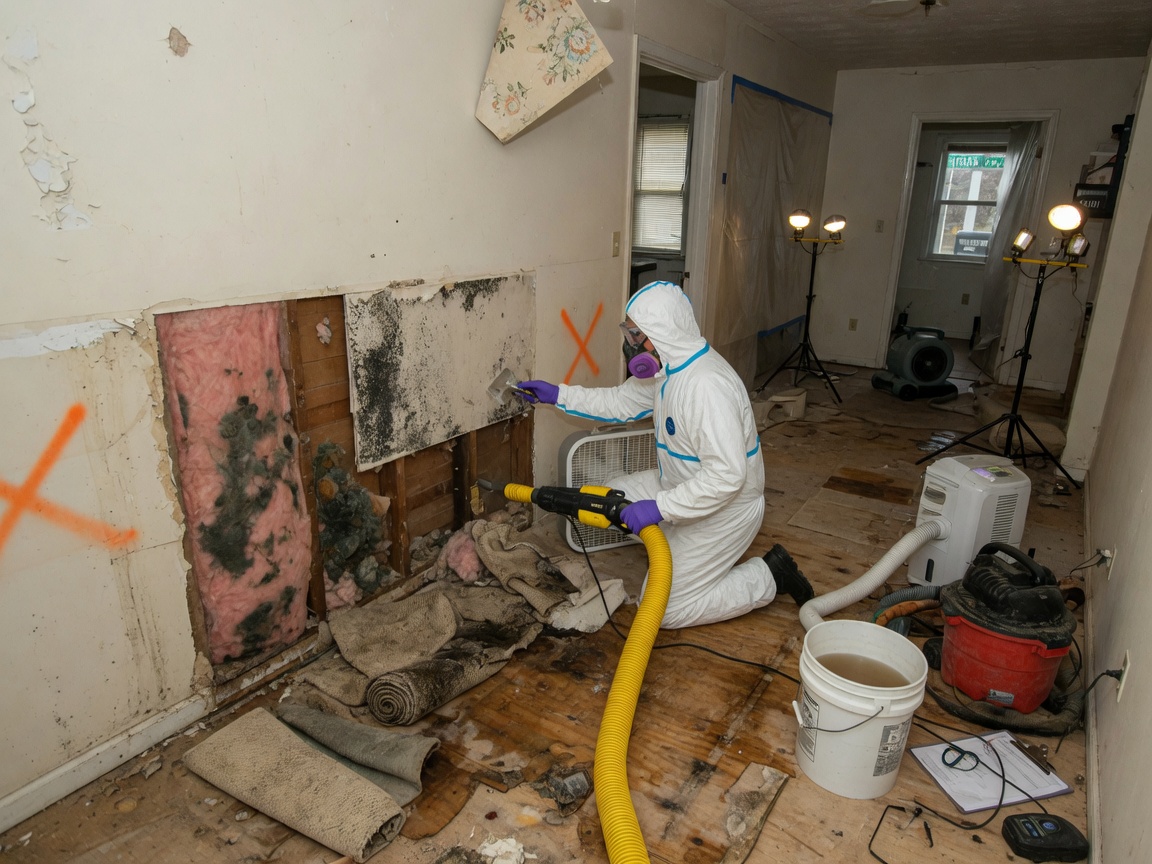
In Bowling Green’s humid subtropical climate, water intrusion from storms or plumbing failures quickly leads to hidden mold colonies within 48 hours, especially in the mild winters when indoor humidity stays elevated. Properties near Lost River Cave or along the WKU campus often have older crawl spaces and slab foundations that trap moisture, allowing spores to travel through HVAC systems into living areas. Technicians begin with moisture mapping using infrared cameras to locate saturation behind drywall and under flooring before any demolition occurs.
Containment protocols use negative air machines and plastic barriers to isolate affected zones, preventing cross-contamination to unaffected rooms in multi-story homes common in Indian Hills and the Plaza. Porous materials such as carpet padding, drywall, and insulation are removed and bagged on-site; non-porous surfaces receive HEPA vacuuming followed by antimicrobial application approved for residential use. Edge cases include mold growth inside wall cavities after minor leaks that homeowners miss for weeks, requiring selective demolition rather than full room gutting.
After physical removal, industrial air movers and dehumidifiers run until wood moisture content drops below 12 percent and relative humidity stabilizes under 50 percent. Final clearance testing uses air sampling and surface swabs sent to an independent lab. Homeowners in Downtown Bowling Green and Greenwood receive a written report documenting pre- and post-remediation conditions along with recommendations for ventilation improvements to reduce recurrence during hot summer months.
Mold Remediation After Water Damage Services We Offer
✓Hidden Mold Detection in Wall Cavities
Infrared scanning and selective inspection locate mold behind drywall and under baseboards without unnecessary demolition in WKU-area homes.
✓Post-Flood Mold Remediation in Basements
Full removal and drying of mold colonies that develop after flooding in Warren County basements and crawl spaces common near Beech Bend Park.
✓HVAC System Mold Cleaning
Ductwork inspection, coil treatment, and filter replacement to stop mold spores from recirculating after water damage events.
✓Attic Mold Remediation After Roof Leaks
Removal of mold growth in attics caused by storm damage, with insulation replacement and ventilation upgrades for Greenwood properties.
✓Contents Cleaning and Odor Removal
HEPA cleaning and deodorization of furniture, clothing, and personal items affected by mold following water intrusion in Downtown Bowling Green residences.
Mold Remediation After Water Damage Cost in Bowling Green, KY
| Service | Typical Range | What Affects It |
|---|---|---|
| Small localized area under 100 sq ft | $900–$1,600 | Increases with wall cavity access or HVAC involvement |
| Medium remediation 100–300 sq ft | $1,800–$3,200 | Includes contents cleaning and multiple rooms |
| Large or multi-area remediation | $3,500–$6,500 | Higher when structural drying or attic work required |
| Independent clearance testing | $250–$450 | Per sample set; recommended for insurance documentation |
Ranges are typical for Bowling Green, KY and confirmed with an exact written quote before any work starts.
How it works
- 1
Initial Assessment
Technicians inspect the property, document moisture levels, and identify all affected materials while noting access challenges in local construction types.
- 2
Containment Setup
Negative air pressure and physical barriers isolate the work zone to protect unaffected areas of the home or business.
- 3
Removal And Cleaning
Porous materials are removed, non-porous surfaces are HEPA cleaned, and antimicrobial agents are applied where appropriate.
- 4
Drying And Verification
Equipment dries the structure to safe moisture levels, followed by independent lab testing to confirm remediation success.
Pricing
Cost depends on affected square footage, depth of hidden growth, and required demolition; estimates provided after on-site inspection.