2026-07-30 · Tom Whitaker
What Influences Water Damage Restoration Costs in Warren County
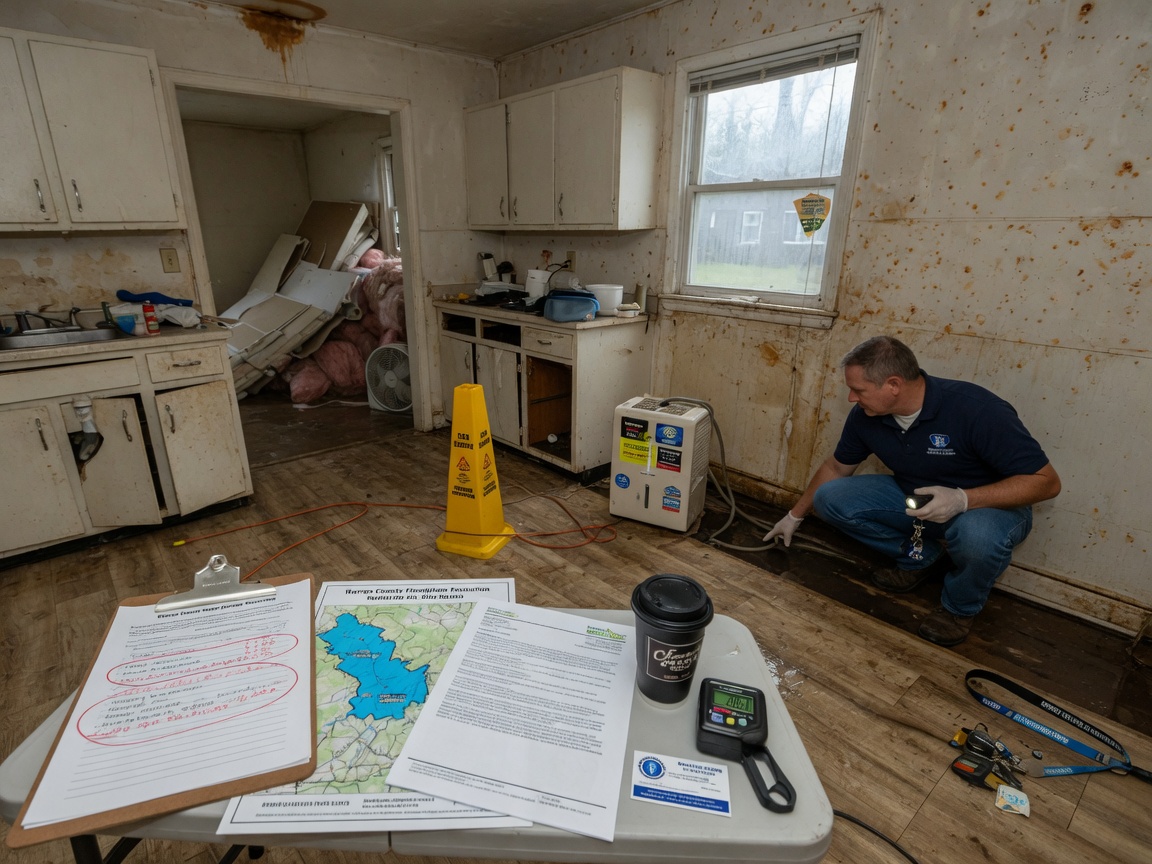
Water damage restoration costs in Warren County depend most on the volume of affected space, the contamination category of the water, how soon extraction and drying start, and the materials involved. These elements interact directly with Bowling Green's humid subtropical climate, where hot summers accelerate mold growth once moisture lingers. Property owners in neighborhoods such as Indian Hills or near the WKU Campus frequently see higher line items when water reaches subfloors or wall cavities that require specialized equipment.
Extent of Affected Area
The square footage and depth of saturation remain the largest single drivers of cost. A localized leak in a single bathroom might involve only 200 square feet of flooring and baseboards, while a storm event that reaches multiple rooms in a Greenwood home can exceed 1,000 square feet. Technicians measure moisture at multiple depths with meters before deciding whether to remove drywall up to 12 inches or simply use air movers and dehumidifiers. Larger footprints require more equipment runtime, additional labor hours, and sometimes temporary power setups. In Warren County, homes built on slabs versus crawl spaces also change the equation because slab homes limit under-floor access and often need more surface drying time.
Category of Water and Contamination Level
Clean water from a supply line costs less to handle than gray water from appliances or black water from sewage backups. Category 3 water demands full containment, PPE protocols, and disposal procedures that increase both time and materials. In areas near Lost River Cave or Beech Bend Park, heavy rains can introduce silt and organic debris that push a job into higher categories. Homeowners who delay calling for help after initial discovery often see clean water turn into category 2 or 3 within 48 hours because of the region's mild winters and high humidity. Proper classification early prevents later mold remediation expenses that can double the original scope.
Response Time and Equipment Needs
Faster arrival of technicians reduces the total drying time and therefore the equipment rental period. In Bowling Green's hot summers, standing water evaporates quickly into the air but leaves hidden moisture in drywall and insulation. Starting structural drying services within the first four hours can limit secondary damage. Properties in the Plaza district or along Russellville Road sometimes present tighter access for large dehumidifiers, requiring smaller portable units that run longer. The address at 1801 Russellville Rd allows crews to reach most Warren County locations within 45 minutes during normal business hours of Mon–Fri 8am–6pm and Sat 9am–2pm.
Local Climate and Building Materials
Warren County's humid subtropical conditions mean relative humidity often stays above 70 percent from late spring through early fall. This slows natural evaporation and raises the risk of hidden moisture behind baseboards in older Downtown Bowling Green homes. Hardwood floors common in WKU-area houses absorb water differently than carpet, requiring targeted drying mats rather than simple fans. When water migrates into insulation or subflooring, replacement decisions add material costs. Checking for trapped moisture after heavy rains becomes critical; the article How to Spot Hidden Moisture After Heavy Rains in Bowling Green outlines practical inspection steps that help owners catch issues before they expand the restoration scope.